a notable shift in Europe’s stance on the war in Ukraine. With Ukraine under mounting battlefield pressure and a major U.S.-Russia summit approaching in Alaska, European leaders are beginning to accept some unavoidable truths about the conflict.
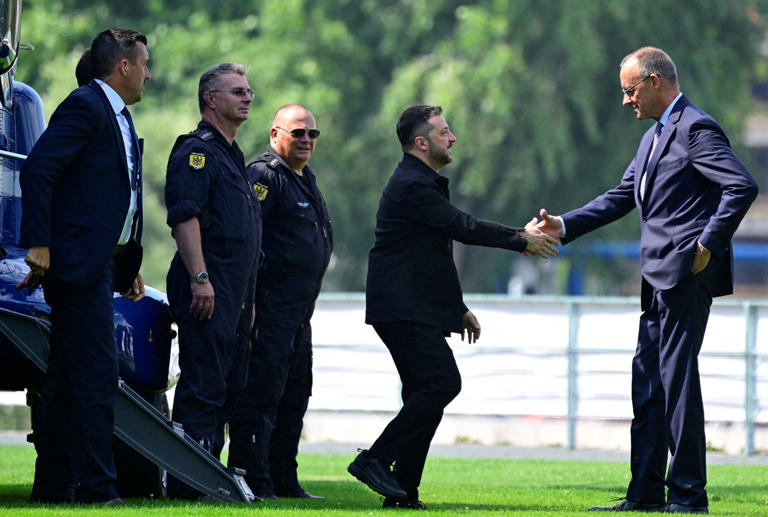
Ukrainian President Volodymyr Zelenskyy met yesterday with European heads of state — and even joined a call that included Donald Trump — as leaders scrambled to influence the former U.S. president before his high-profile meeting with Vladimir Putin.
For the first time, some European leaders are signaling a willingness to discuss territorial concessions. Germany’s Chancellor Friedrich Merz said the current frontline should serve as the starting point for negotiations — echoing recent comments by NATO Secretary General Mark Rutte, who suggested de facto recognition of Russia’s occupation may be inevitable.
That would mark a major shift from the hardline stance Europe and Ukraine held through the war’s early years. At the same time, leaders in Kyiv and Brussels insist any land swaps must be reciprocal and must come with strong security guarantees.
But questions remain about whether Europe’s position is realistic. Despite years of talk, NATO membership for Ukraine remains off the table, something even past U.S. administrations — including President Biden’s — were unwilling to commit to. Analysts argue Europe risks wasting diplomatic capital by clinging to outdated principles rather than pushing for enforceable guarantees, like permanent weapons stockpiles for Ukraine or a limited European training presence on Ukrainian soil.
Critics also warn that by leaning on the United States to underwrite Ukraine’s security, Europe risks looking more like a dependent than a true geopolitical actor. Some leaders are calling for a broader reset — urging the EU to negotiate directly with Moscow and craft its own security role in the region.
At stake is not only Ukraine’s future, but Europe’s. Rising defense budgets across the continent are already straining social programs and fueling populist movements. And with far-right parties gaining ground in Europe’s largest economies, the war’s political aftershocks are growing harder to ignore.
Looking ahead, much depends on this week’s meeting between Donald Trump and Vladimir Putin in Anchorage. Diplomats hope it could deliver the first outlines of a ceasefire deal — one that Zelenskyy might be persuaded to accept if it secures Ukraine’s reconstruction and a path toward eventual EU membership.
But if European leaders remain too rigid, they risk being sidelined in the negotiations altogether — and, some argue, appearing to stand against peace after more than three years of devastating war.
Stay with us as we continue to follow developments from Alaska, where the Trump-Putin talks are set to begin later this week.
Reporting by Lisa Lomami.