We have breaking news from Brussels: the European Union is reportedly set to suspend plans for sanctions against Israel following the recent Gaza cease-fire. The move comes after the U.S.-brokered Israel-Hamas truce brought a temporary halt to hostilities in the region, prompting EU officials to reconsider punitive measures they had threatened just last month.
According to Politico Europe, the European Union had been preparing sanctions targeting Israeli ministers and reducing certain trade relations in response to Israel’s military operations in Gaza City. The proposals, which included blacklisting ‘extremist ministers’ and partially suspending trade under the EU-Israel Association Agreement, were put on hold after the cease-fire agreement between Israel and Hamas was reached.
Four European diplomats told Politico that the plan to implement sanctions is unlikely to gain the necessary support in upcoming meetings of EU foreign ministers and leaders. Several member states, including Germany, Italy, Hungary, and the Czech Republic, have opposed the measures, effectively blocking their advancement. Meanwhile, countries such as the Netherlands, Spain, Belgium, Ireland, and Finland had pushed for freezing the EU’s free trade agreement with Israel, though this also required a supermajority to pass.
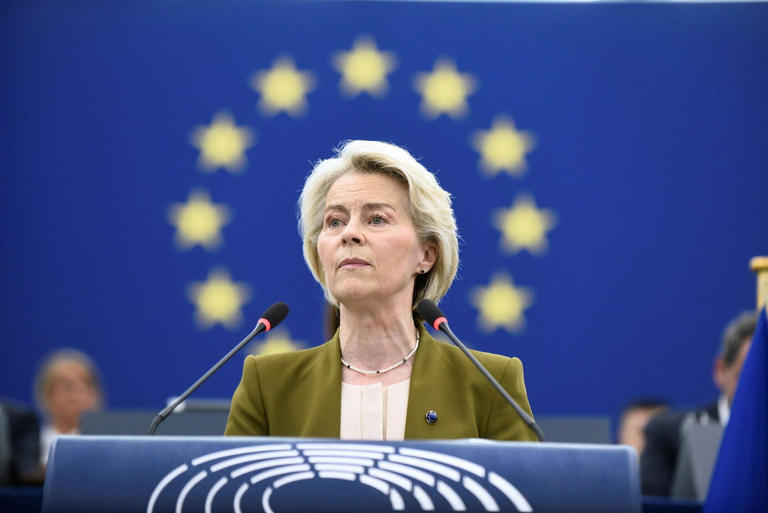
European Commission President Ursula von der Leyen had originally proposed sanctions, linking the measures to what she described as Israel’s actions contributing to a ‘man-made famine’ in Gaza. The day prior, the Netherlands announced travel restrictions on Israel’s National Security Minister Itamar Ben-Gvir and Finance Minister Bezalel Smotrich, banning them from entering the Schengen Area of 25 EU nations and four associated countries. These steps were part of a broader EU effort to hold Israel accountable for actions during the Gaza conflict.
The European Union has previously imposed sanctions on Israeli settlers and far-right movements. In 2024, five individuals and three organizations—including settler Moshe Sharvit and Zvi Bar Yosef—were sanctioned for their role in violence against Palestinians. Far-right activists Bentzi Gopstein, Baruch Marzel, and the organization Tzav 9, known for obstructing aid deliveries to Gaza, were also sanctioned. However, attempts to expand these measures have repeatedly been blocked, with Hungary exercising its veto power to stall EU-wide action.
As the dust settles following the Gaza cease-fire, EU member states are now reassessing whether such sanctions are still necessary, signaling a potential shift in Europe’s approach to the Israeli-Palestinian conflict. The decision could have significant implications for Israel’s diplomatic and trade relations with the European Union in the months ahead.
Reporting by Carl Montel.