
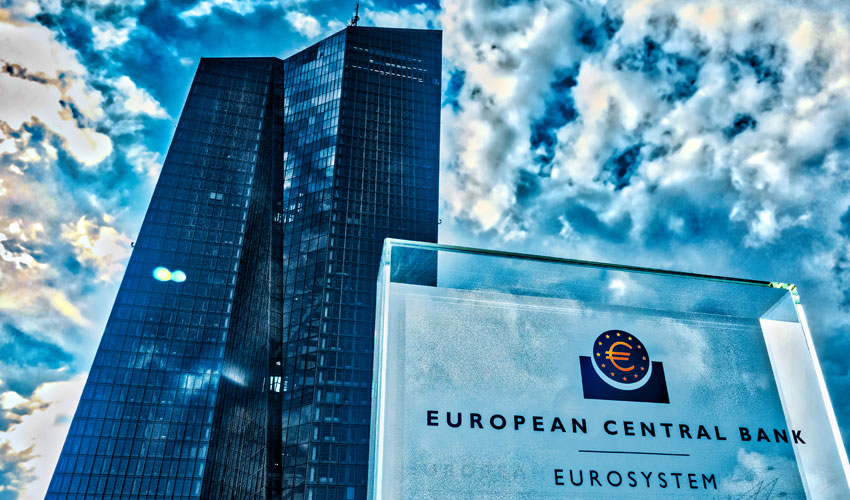
The European Central Bank is expected to cut interest rates once again this Thursday, marking what would be its eighth reduction in just over a year. But this time, a growing number of voices inside the ECB are calling for a summer pause in the rate-slashing campaign, citing deepening uncertainty at home and abroad.
With inflation in the eurozone now aligned with the ECB’s 2% target, Thursday’s rate cut is widely anticipated and seen as relatively uncontroversial. The real focus, however, will be on what ECB President Christine Lagarde signals about the path ahead, particularly whether the central bank might hit the brakes on further cuts after this move.
A Turning Point?
Investors are already betting that the ECB will hold steady in July, and some policymakers are pushing for exactly that a breather to reevaluate the economic landscape amid volatile global trade dynamics and U.S. unpredictability.
Analysts at Deutsche Bank suggest that the only way to get cautious ECB members often called the “hawks” to back this week’s rate cut may be to offer a subtle promise: a pause in July, and possibly no more moves until September unless there’s a major downturn in the data.
A rate cut on Thursday would bring the ECB’s key deposit rate down to 2.0% a level it considers “neutral.” That means it would no longer be holding back economic growth, but also not actively stimulating it either.
Two-Sided Forecast
What complicates the outlook is that the eurozone economy is showing two very different faces. In the short term, inflation could dip below target, especially as energy costs fall, and the euro remains strong. But long-term, other pressures, like defense spending, green energy investments, and a shrinking workforce may reignite inflation.
The ECB is also expected to downgrade its growth and inflation projections for 2026 as signs of economic weakness continue to mount. Uncertainty from U.S. President Donald Trump’s aggressive trade agenda is already taking a toll on European confidence and investment, casting a shadow over future prospects even if an eventual resolution is found.
Structural Shifts Ahead
According to Investec economist Sandra Horsfield, the unpredictability around tariffs is discouraging firms from making long-term commitments, which itself dampens inflation. But as companies reorganize global supply chains to sidestep trade barriers, costs could rise again.
UBS economist Reinhard Cluse believes the window for interest rate cuts may close after summer and warns that the ECB might even have to raise rates again in 2026 to combat resurging inflation, especially as Europe’s labor market tightens during a generational demographic shift.
So for now, all eyes are in Frankfurt, where Thursday’s rate cut may be the easy part. The tougher call will be what happens next. That’s the latest from the world of global finance.
Reporting by Megan Owen.