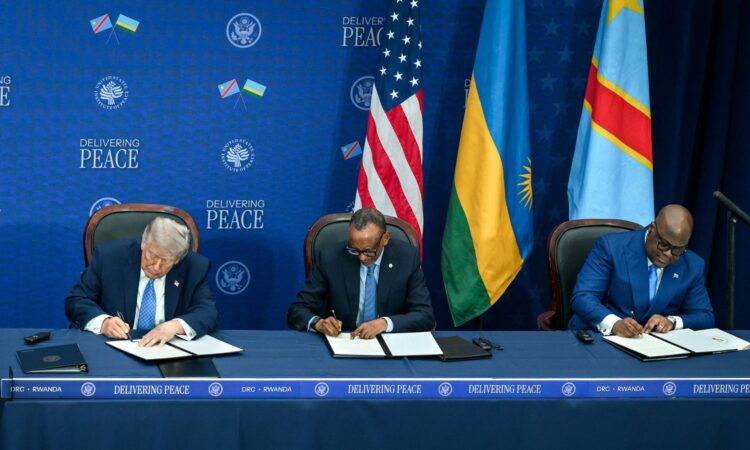
In a highly symbolic ceremony in Washington, Congolese President Felix Tshisekedi and Rwandan President Paul Kagame signed a peace agreement aimed at ending decades of conflict in eastern Congo. The event took place at the recently renamed Donald J. Trump Institute for Peace.
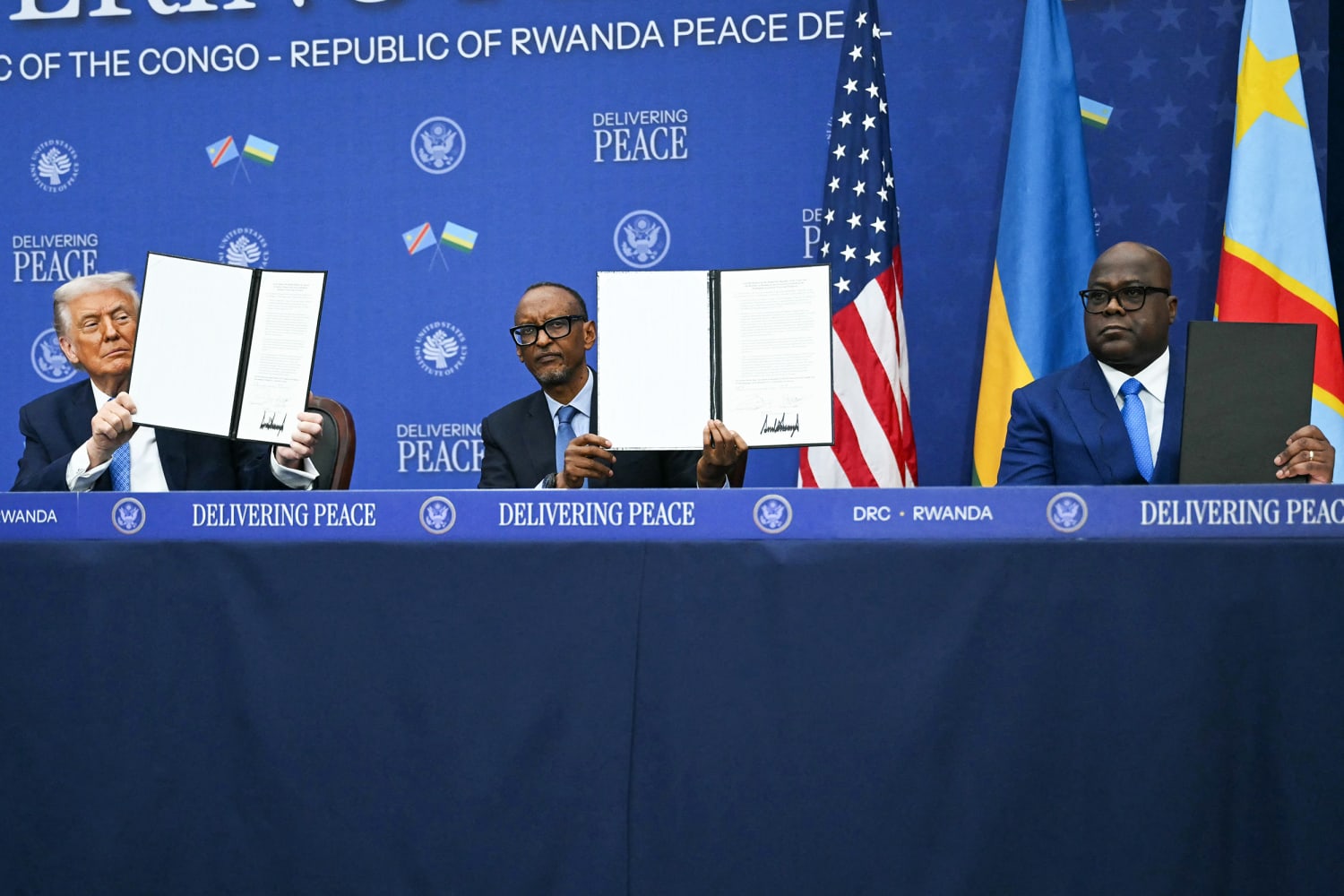
This U.S.-brokered deal, first agreed upon this past June, represents a significant diplomatic milestone. However, despite the formal signing today, fighting continues unabated on the ground. Intense clashes between Congolese government forces and the Rwanda-backed M23 rebel group have been reported this week near Kamanyola, a town along the Rwandan border.
The peace accord calls for Rwanda to withdraw its troops and cease support for the M23 rebels, a rebel faction led by Congolese ethnic Tutsi commanders. In return, the Democratic Republic of Congo is expected to disarm the Democratic Forces for the Liberation of Rwanda, or FDLR—an armed militia largely made up of ethnic Hutu extremists responsible for atrocities during the 1994 Rwandan genocide.
To date, neither side has fully complied with these conditions. Yet, both leaders express hope that this deal will finally bring lasting peace to the region.
President Tshisekedi told supporters last week, “This peace accord will, I hope, bring a real peace, true peace to our countries,” adding that it means Rwandan troops must leave Congolese territory for good.
Rwanda’s government, through spokesperson Yolande Makolo, acknowledged progress since the June signing but cautioned that peace “comes in steps” and that the deal is “not a magic wand.”
Despite Rwanda’s denial of any troop deployments or backing of M23, United Nations investigators have documented the presence of Rwandan forces in eastern Congo since 2022 and confirmed Rwandan command over M23 fighters. The U.S. government has also verified Rwandan military involvement, including the deployment of surface-to-air missile systems inside Congolese borders.
The peace deal also includes an economic partnership component focused on joint infrastructure development, electricity generation, and tackling illegal armed groups and smuggling in Congo’s mineral-rich eastern provinces. However, Congolese officials emphasize that security improvements must come first before these economic initiatives can take effect.
The Democratic Republic of Congo is one of the poorest nations globally, yet it is a critical supplier of valuable minerals such as cobalt, copper, lithium, and tantalum—key ingredients in the global supply chains for electronics and electric vehicles.
Alongside the peace agreement, Congo is expected to formalize an economic partnership with the United States, with Tshisekedi’s spokesperson Tina Salama noting Washington’s strong interest in the country’s natural resources.
Still, the deal faces sharp criticism at home. Opposition groups and civil society organizations in Congo question the agreement’s effectiveness, demanding more concrete results. The Congolese government, meanwhile, is urging the Trump administration to exert pressure on Rwanda to fully withdraw its military presence.
As this peace process continues, the world watches closely to see if diplomacy can overcome years of entrenched conflict in this volatile region.
DR Congo-Rwanda peace deal_ Leaders sign accord alongside US in Washington DC
That’s all for now on the DRC-Rwanda peace agreement. Stay with SNEWS TV for continuing coverage on this and other global developments.
Reporting by Ehud Jones.