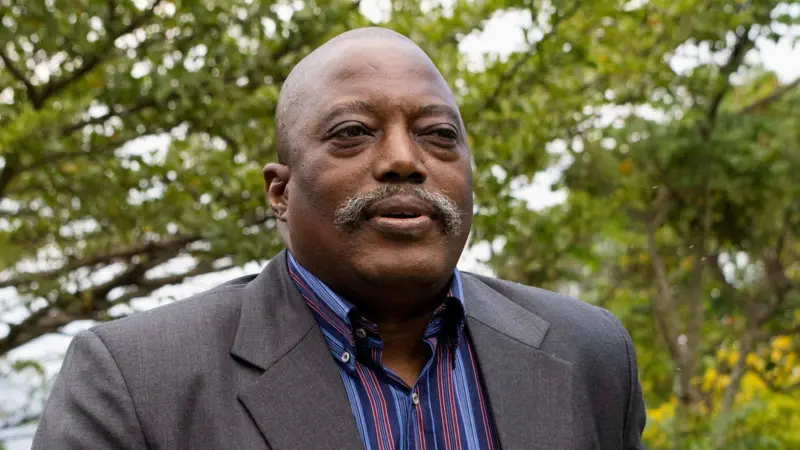
In the Democratic Republic of the Congo, a sweeping new media restriction is sparking national and international concern. The Congolese government has issued a ban prohibiting media outlets from reporting on the activities of former President Joseph Kabila or interviewing members of his political party.
The directive was announced by the Supreme Council of Audiovisual and Communication, known as CSAC. Its president, Christian Bosembe, warned that any violations of the order could lead to media outlet suspensions.
The move follows the recent and high-profile return of Joseph Kabila to the DRC after more than two years in self-imposed exile. His return has intensified political tensions between Kabila and his successor, President Félix Tshisekedi.
Kabila, who was seen last week in Goma—an eastern city under the control of the M23 rebel group—has been under growing scrutiny. The government has accused the former president of treason and of having links to the M23 rebels, who continue to battle the Congolese army. Kabila has consistently denied any connection to the armed group.
The Senate recently voted to lift his immunity, a move that has fueled speculation of an impending prosecution. Kabila, in turn, has fiercely criticized the Tshisekedi administration, describing it as authoritarian and “a dictatorship.”
Kabila himself has not commented publicly on the media ban, but Ferdinand Kambere, the secretary of his party, denounced the measure online as “arbitrary.” In defiance of the restriction, a spokesperson for the M23 rebels said media in territories they control would not comply with the government’s order.
Human rights advocates and political observers are warning that the ban could backfire. Jean-Claude Katende, president of the African Association for the Defense of Human Rights, called it an “abuse of power.” Others, like political analyst Ambroise Mamba, argue it may only fuel public curiosity about Kabila’s movements and statements. Since his return, Kabila’s team has actively posted videos and updates online, showing him meeting civil society leaders and religious figures in Goma.
At a time when tensions are already boiling over in eastern Congo—with conflict, political rivalry, and foreign interference clouding the horizon—this latest move by the Tshisekedi government is likely to deepen divisions in the nation’s fragile political landscape.
We will continue to monitor this story as it develops.
Reporting by Ehud Jones