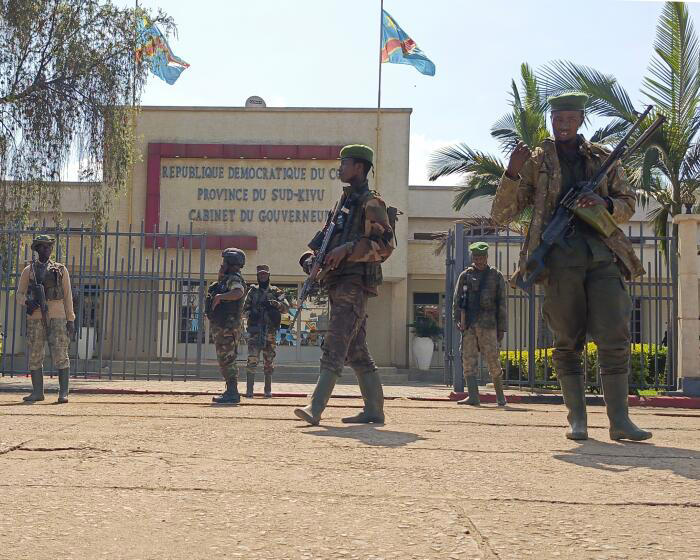
We turn to the Democratic Republic of Congo, where fresh waves of violence are undermining fragile peace efforts. Despite an ongoing Qatar-led initiative to end the bloodshed, Rwanda-backed M23 rebels have been accused of massacring 319 civilians in recent weeks.
Congolese authorities report at least 80 people were killed on August 4 in the village of Nyaborongo, and six more—including two children—lost their lives on July 24 in Lumbishi. The army blames the RDF/M23-AFC coalition, which it says is also forcibly recruiting young people, including minors, into its ranks.
The killings come amid a decades-long conflict in Congo’s mineral-rich east, home to over a hundred armed groups. The violence is threatening a hoped-for permanent peace deal, targeted for August 18, that promises civilian protection and the safe return of millions of displaced people.
Adding to the grim toll, U.N. human rights chief Volker Turk recently accused M23 fighters supported by Rwanda’s military of killing 319 civilians in four North Kivu villages between July 9 and 21. He called it one of the deadliest documented massacres since the rebels resurfaced in 2022.
M23 denies the allegations, calling the U.N. report “unverified and politically motivated,” and is demanding an independent investigation. Rwanda’s foreign minister dismissed Congo’s accusations outright.
Both sides signed a declaration of principles in Qatar on July 19, pledging to end the fighting and restore government control in rebel-held cities. But with violence intensifying, the road to peace in eastern Congo appears as uncertain as ever.
Reporting by Ehud Jones