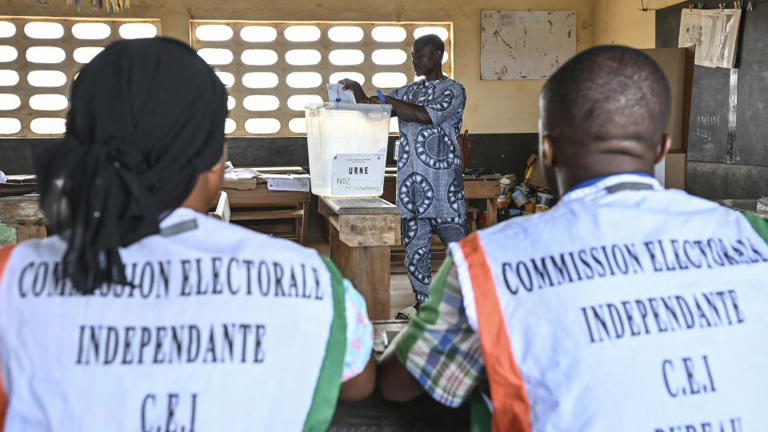
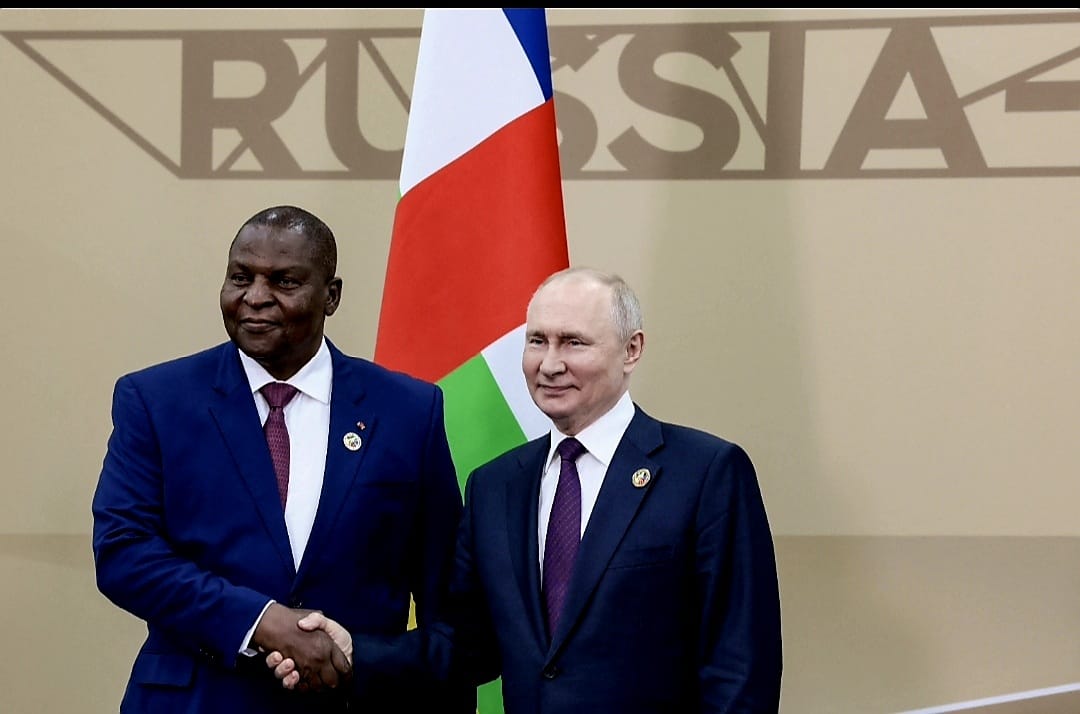
Voters in the Central African Republic headed to the polls Sunday in a significant national election that includes the presidency, federal legislature, regional, and municipal seats. Incumbent President Faustin Archange Touadéra, a close ally of Russia, is widely expected to secure a third term, reinforcing Moscow’s influence in the strategically important African nation.
Touadéra has leaned heavily on Russian support, including backing from Russian mercenaries, to stabilize the country, which has long been plagued by violence and instability. This election marks a major milestone, with nearly 2.4 million registered voters participating, an unprecedented turnout given the scope of the combined ballots.
Despite some early delays at polling stations, the voting process went smoothly overall and concluded at 7 p.m. local time, with vote counting now underway. Election officials have not yet provided an estimate of voter turnout. Preliminary results are anticipated within the week, with a runoff scheduled if no candidate secures an outright majority.
Facing competition from six candidates, including former prime ministers Anicet-Georges Dologuélé and Henri-Marie Dondra, Touadéra remains the favorite. The main opposition coalition, the Republican Bloc for the Defense of the Constitution, boycotted the election, citing concerns over political fairness. Neither of Touadéra’s key challengers are affiliated with this coalition.
Touadéra’s campaign focused on themes of peace, stability, and economic recovery in a country of roughly 5.5 million people, ravaged by conflict since 2013. That year, a coalition of predominantly Muslim rebels seized power, ousting former President François Bozizé. Although a 2019 peace deal partially eased violence, some armed groups withdrew from the agreement and hostilities have continued.
“The Central African Republic has endured cycles of brutal regime changes every decade. I urge the people to choose institutional stability and prosperity,” Touadéra said in a recent interview.
His main rival, Anicet-Georges Dologuélé, who ran in previous elections, promises to revive the nation’s battered economy with a focus on agriculture and sustainable peace. “President Touadéra has left much in ruins. Our plan aims to lift the country out of poverty. We must rebuild the economy,” Dologuélé stated.
Security remains the primary concern for voters. The United Nations peacekeeping mission, MINUSCA, has played a vital role in election logistics and security since 2014, deploying approximately 14,000 troops and 3,000 police officers to safeguard polling stations. The country’s difficult terrain, dense forests, and poor infrastructure posed logistical challenges in distributing election materials to remote areas.
The U.N. Security Council recently extended MINUSCA’s mandate but signaled an eventual reduction in presence due to budgetary limits.
“Thanks to peace agreements, and security support from Russian mercenaries and Rwandan forces, the Central African Republic is more secure now than during the 2020 elections,” noted Lewis Mudge, Human Rights Watch’s Central Africa director.
As the nation waits for election results, the outcome is expected to shape the Central African Republic’s future direction and Russia’s growing footprint in the region.
Reporting by Ehud Jones.