We turn our focus to Russia’s carefully calculated response to the ongoing conflict between Israel and Iran—a crisis that is shaking diplomatic foundations across the Middle East and beyond.
Despite its close and growing ties with Tehran, Moscow has chosen a cautious path—publicly condemning Israel’s military strikes but stopping short of offering Iran direct military assistance.
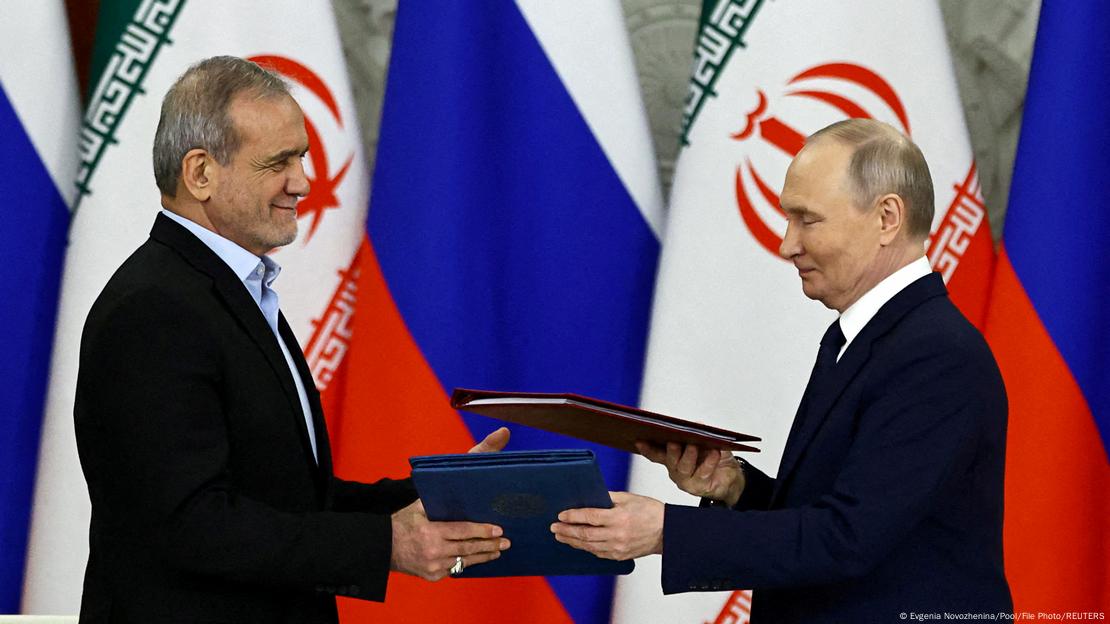
Just hours after Israeli forces launched attacks on Iran’s nuclear infrastructure last Friday, Russian President Vladimir Putin was on the phone with both Iranian President Masoud Pezeshkian and Israeli Prime Minister Benjamin Netanyahu. According to the Kremlin, Putin expressed condolences to the Iranian people for the loss of life and denounced Israel’s actions as violations of the UN Charter and international law.
Yet while these statements signal diplomatic solidarity with Tehran, they do not translate into battlefield support.
Analysts say Russia is balancing on a tightrope—caught between longstanding alliances and broader geopolitical interests. Though Iran is one of Russia’s key strategic and economic partners, the Kremlin appears reluctant to jeopardize its other foreign policy goals, especially its fragile ties with the United States and other Western powers.
Despite a newly ratified Treaty on Comprehensive Strategic Partnership between Russia and Iran, the agreement does not include a mutual defense clause. Instead, it simply obliges both nations not to aid each other’s enemies. Middle East analysts agree: Moscow is unlikely to send weapons or troops to Tehran’s aid—at least not publicly.
Marianna Belenkaya, a veteran journalist and analyst now based in Israel, told SNEWS TV that Russia has little incentive to escalate further. She believes Moscow may offer some quiet, behind-the-scenes assistance—but official military involvement is highly improbable, especially as Russia seeks to stabilize or even improve relations with Washington.
Russia and Iran’s alliance has deepened over the years, particularly since Western sanctions isolated both nations. Iran’s admission into BRICS and alleged military cooperation—such as Iran supplying drones used by Russia in its war against Ukraine—illustrate the strength of their economic and security ties. Reports even suggest Moscow paid for Iranian drones with $104 million in gold bars.
Yet even with this level of cooperation, Russia is proceeding with caution.
Ruslan Suleymanov, a Middle East expert based in Cairo, says Moscow is acting out of calculated restraint. “The Kremlin is following an old principle,” he explains, “‘Fight when necessary, but avoid chaos.’” In other words, Moscow is determined to protect its influence in the region—without getting entangled in a war that could spiral beyond control.
Putin has also positioned Russia as a potential peace broker. Last year, he reportedly encouraged Iran’s Supreme Leader Ayatollah Ali Khamenei to reengage in diplomatic negotiations. And just recently, former U.S. President Donald Trump stated in an ABC News interview that he would be open to Russia mediating in the Israel-Iran standoff.
According to diplomatic insiders, Russia was even being considered as a key player in a future nuclear deal with Iran. Under a proposed arrangement, Moscow might take custody of Iran’s stockpile of highly enriched uranium and act as an impartial arbiter in the event of violations. Such a role would sideline European nations like Germany, France, and the UK, who served as guarantors of the original 2015 nuclear deal that the U.S. exited under President Trump in 2018.
As the crisis deepens, it’s clear that Russia is walking a fine line—torn between its loyalty to Tehran and the broader stakes of global diplomacy. While Moscow’s rhetoric favors Iran, its restraint reveals a strategy focused not on escalation—but influence.
We will continue to follow Russia’s evolving role in this conflict and what it means for the balance of power in the region.
Reporting by Carl Montel.