
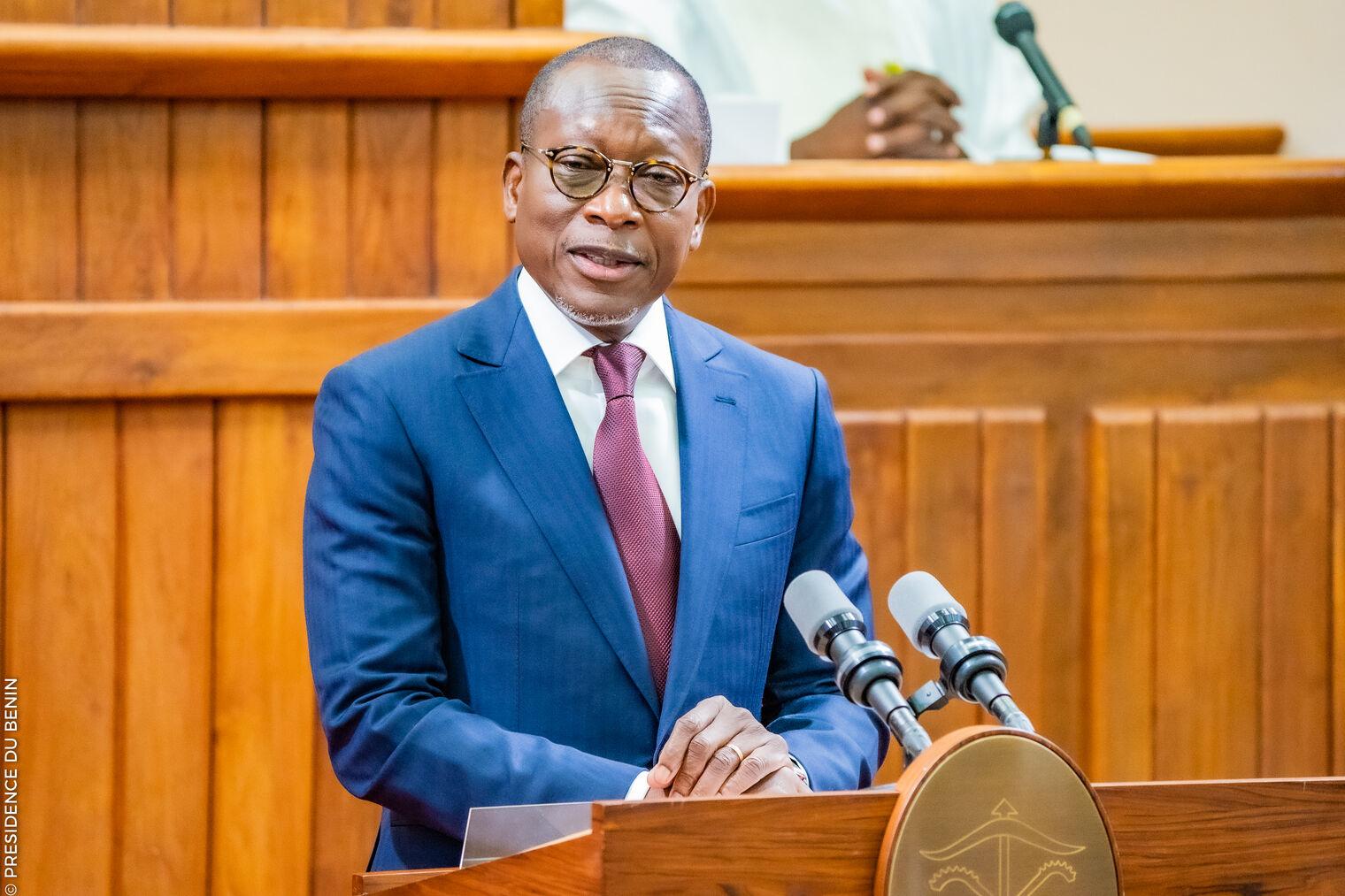
Benin has taken a major step toward reshaping its political system, approving sweeping constitutional reforms that will create a new Senate and lengthen presidential and parliamentary terms.
The country’s National Assembly has adopted a constitutional amendment extending both presidential and legislative mandates from five years to seven. The reform was passed by an overwhelming margin — 90 votes in favor to 19 against — comfortably clearing the four-fifths majority required for constitutional change.
While the amendment marks a significant shift for Benin’s future governance, it will not benefit the current president, Patrice Talon. Talon, who has served two consecutive terms, has just seven months remaining in office, and the constitution’s two-term limit remains firmly in place. The changes are set to take effect after next year’s presidential election, scheduled for April.
A central feature of the reform is the creation of a Senate, a second legislative chamber expected to include between 25 and 30 members. According to the amendment, the Senate will be composed largely of seasoned political and security figures — including former presidents, past speakers of the National Assembly, former heads of the Constitutional Court, and senior military leaders. Some members will also be appointed by the president.
Lawmakers say the Senate’s mission will be to regulate political life and help safeguard national unity, democracy, and peace. The upper chamber will have the authority to request a second review of laws passed by the National Assembly, although certain legislation — such as finance bills — will be exempt.
Before the reforms can take effect, they must still be validated by Benin’s Constitutional Court. If approved, they will usher in a new institutional framework just as the country prepares for a leadership transition.
President Talon, who has governed for a decade, is constitutionally barred from seeking another term. Attention is now turning to his potential successor, with Finance Minister Romuald Wadagni widely viewed as the front-runner. The political landscape has been further shaped by the exclusion of the main opposition candidate, who failed to secure the required endorsements to run.
As Benin approaches a pivotal election, these constitutional changes are expected to play a defining role in how power is exercised — and checked — in the years ahead.
Reported by Ehud Jones.