
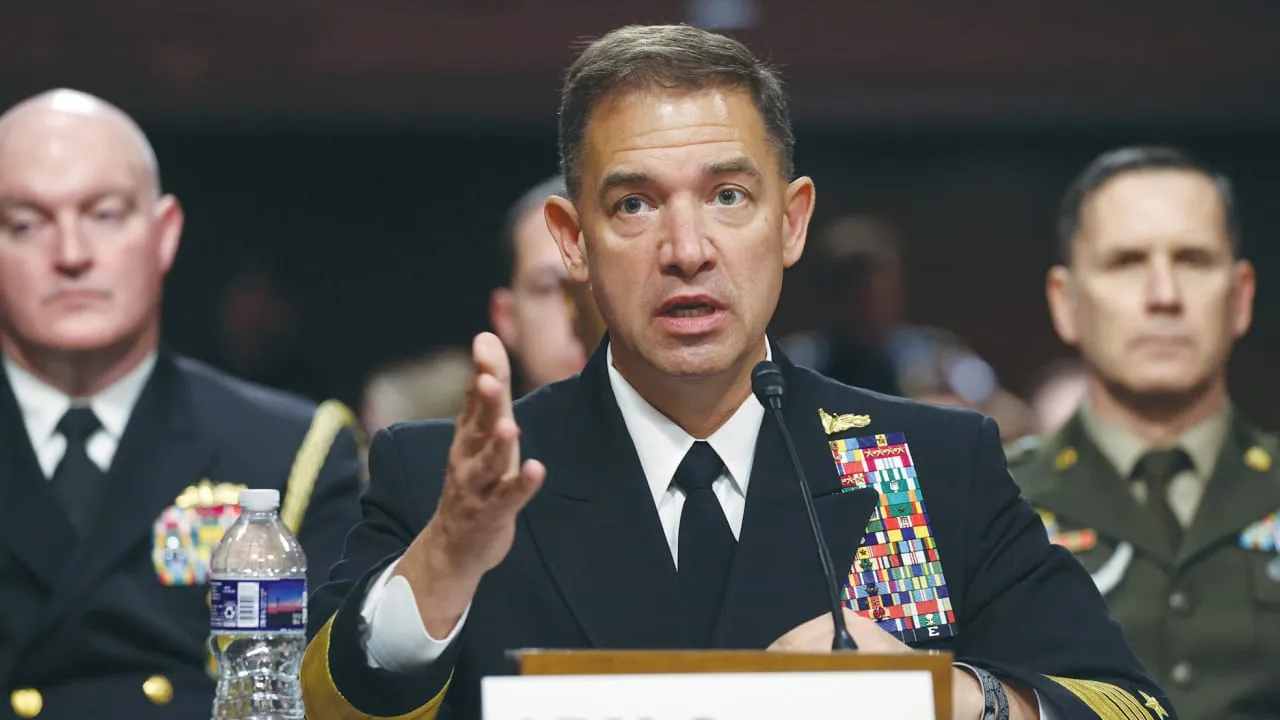
Iran’s economic difficulties are reportedly putting increasing pressure on its military establishment, with regional militias allegedly redirecting funds to support Iran’s Islamic Revolutionary Guard Corps, known as the IRGC. The claim comes from U.S. Central Command chief Admiral Brad Cooper, who says financial constraints are affecting both Iran’s military and groups aligned with Tehran across the region.
REGIONAL MILITIAS REPORTEDLY REDIRECT FUNDS TO IRAN
In a video statement released Friday, Admiral Brad Cooper said Iran-backed groups, including Hezbollah, Hamas and armed organizations operating in Iraq, were reportedly channeling money back to the IRGC as Tehran faced mounting economic pressure after nine months of war.
According to Cooper, the financial strain has become so severe that some Iran-aligned militias are allegedly withholding payments from their own fighters to help support the Iranian military organization.
He also claimed that the IRGC itself was struggling to pay its personnel. These statements have not been independently established by the information provided, and the precise scale of the reported transfers remains unclear.
U.S. ECONOMIC PRESSURE ON TEHRAN
Cooper attributed part of Iran’s financial difficulties to measures imposed by Washington.
He said the U.S. naval blockade had cost Iran an estimated 25 billion dollars in lost oil revenue. He also reported that U.S. Central Command and the Treasury Department had frozen approximately 350 million dollars in Iranian cryptocurrency assets in recent weeks.
The measures form part of the Trump administration’s broader effort to increase economic pressure on Tehran and push the Iranian government toward an agreement.
However, the long-term impact of these measures on Iran’s ability to finance its military and maintain support for allied groups remains uncertain.
STRAIT OF HORMUZ REMAINS A KEY FLASHPOINT
The financial dispute is unfolding alongside continuing tensions around the Strait of Hormuz, a strategic maritime corridor through which substantial volumes of global oil supplies pass.
Cooper linked what he described as increased Iranian attacks on commercial shipping to growing desperation within the IRGC.
He said the waterway remained open, with approximately 400 ships and 100 million barrels of oil passing through the strait during the previous week.
According to the supplied report, U.S. forces have largely paused strikes on Iranian military positions threatening the waterway in recent weeks.
The situation remains sensitive because any prolonged disruption to shipping through the strait could affect international energy markets and increase pressure on oil-importing economies.
DIPLOMATIC EFFORTS CONTINUE
Despite the military and economic pressure, diplomatic efforts to end the conflict are continuing.
A report by Axios on Friday said the White House and Qatari mediators were awaiting Tehran’s response to an American counterproposal intended to bring the war to an end.
An unnamed American official cited in that report said the administration had ordered a pause in certain military operations to avoid further escalation ahead of the U.S. midterm elections.
The report also discussed political pressure on President Donald Trump, citing an NBC News poll that placed his approval rating at 38 percent.
According to Axios, U.S. officials believe Iran may be increasing attacks on vessels crossing the Strait of Hormuz in an attempt to push oil prices higher and increase pressure on Washington.
Those assessments reflect the views attributed to U.S. officials and should not be treated as independently confirmed explanations for Iran’s actions.
The reported transfer of funds from Iran-aligned militias to the IRGC highlights the financial and strategic challenges facing Tehran as the conflict continues.
Washington is maintaining economic pressure while diplomatic efforts seek a possible path toward ending the war. Meanwhile, developments around the Strait of Hormuz remain critical for regional security and global energy supplies.
Whether the financial pressure will change Iran’s military calculations or influence the negotiations remains to be seen.
Reporting by Swati Montel For SNEWS TV.