On May 7, ahead of finals week, dozens of student demonstrators occupied a section of Butler Library. According to police, the NYPD arrested 80 individuals after being called in by the university to remove protesters who were occupying the space without authorization.
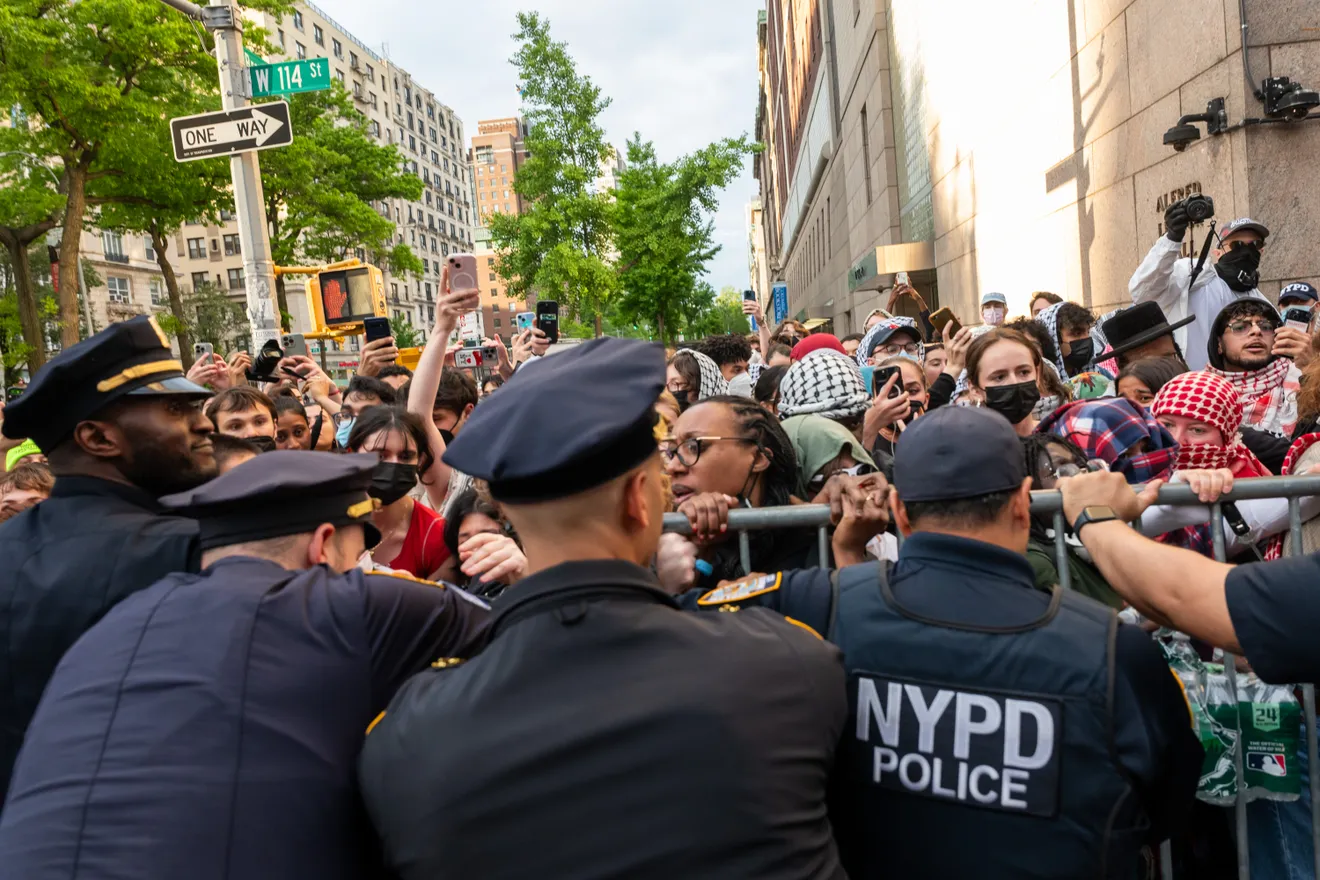
Video footage circulating on social media shows tense confrontations at the entrance to a reading room, with university officials trying to block access. Outside, large groups of students chanted, raised signs, and attempted to push into the library, many wearing masks and keffiyehs.
Among the demonstrators’ demands was the release of Mahmoud Khalil, a Columbia graduate student currently in ICE detention over his pro-Palestinian activism. Acting University President Claire Shipman issued a statement condemning the disruption, calling it a violation of university policies, especially during the critical final exam period.
Shipman emphasized that, quote, “Columbia strongly condemns violence on our campus, antisemitism, and all forms of hate and discrimination, some of which we witnessed today.” The university confirmed that two campus security staff were injured in a rush of the crowd, and student media reported injuries among protesters as well.
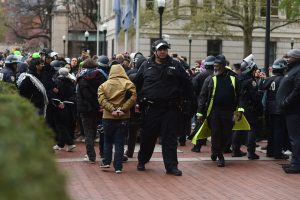
As the situation escalated, the NYPD, wearing helmets and riot gear, entered the closed-off campus grounds. Mayor Eric Adams posted on social media, confirming that police acted at the university’s written request, saying, quote, “We will not tolerate hate or violence in any form in our city.”
While the specific charges against the 80 arrested protesters have not yet been announced, police were seen escorting groups of cuffed demonstrators into NYPD vans and buses late into the evening.
In response to the incident, Secretary of State Marco Rubio stated that officials are now reviewing the visa statuses of foreign nationals involved in the library occupation.
Outside Columbia’s gates, a second wave of protesters gathered in solidarity with those arrested. This demonstration comes just over a year after a similar wave of campus protests nationwide, sparked by Israel’s ongoing military campaign in Gaza following the October 7 Hamas-led attacks.
The university, which has limited campus access in recent weeks, said the encampments and sit-ins have raised safety concerns, particularly for Jewish students. However, protesters have firmly denied allegations of antisemitism, insisting their actions focus on drawing attention to the rising Palestinian death toll.
Earlier in the day, student activists announced on social media they had renamed the occupied library space the “Basel Al-Araj Popular University,” in honor of a Palestinian activist and writer. Their post read, “Repression breeds resistance. If Columbia escalates repression, the people will continue to escalate disruptions on this campus.”
This standoff also comes under the shadow of federal pressure. Back in March, the Trump administration issued an ultimatum to Columbia University, demanding it adopt stricter protest regulations to qualify for federal funding — including rules governing masks, protest behavior, and police involvement.
Tonight’s arrests echo events from just over a year ago, when NYPD riot police stormed the Columbia campus after a similar student takeover, leading to over 100 arrests — though most charges were later dropped.
We will continue to follow this developing story and bring you updates as they come in.
Reporting by Katy Moore.