
Military tensions across the Middle East have escalated once again following a new wave of Iranian strikes targeting locations in Kuwait, Jordan, Iraq, and Bahrain. The developments come as the confrontation between Iran and the United States continues to expand, raising fresh concerns about regional security and global energy supplies.
Iran has launched a new series of military strikes across the Middle East, targeting facilities in Kuwait and a U.S. military installation in Jordan while regional governments remain on high alert amid the escalating conflict.
According to Kuwaiti authorities, one strike hit a critical facility, triggering large explosions and a fire. Emergency crews, supported by military and National Guard personnel, responded quickly and later brought the blaze under control.
Officials said there were no reported casualties, and the damage was limited to infrastructure and property.
The Kuwaiti military also announced that its air defense systems intercepted several drones that entered the country’s airspace, underscoring growing security concerns throughout the Gulf.
Iran’s Islamic Revolutionary Guard Corps later claimed responsibility for attacks on energy-related infrastructure in Kuwait, describing the operations as part of its response to ongoing U.S. military actions in the region.
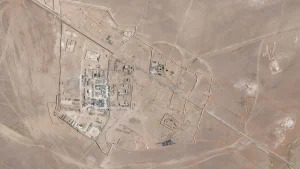
Meanwhile, Iranian state media reported that military operations also targeted the Azraq Air Base in Jordan, a facility used by U.S. forces.
Jordan’s military confirmed that its air defense systems intercepted multiple ballistic missiles that entered the country’s airspace, although officials did not immediately provide further details regarding damage or casualties.
Elsewhere, Iranian media reported additional strikes in Iraq, including an attack near Dehloran. Local officials said projectiles struck the area but reported no immediate injuries.
Bahrain also activated emergency warning systems after reports of incoming missile threats.
Authorities urged residents to seek shelter while monitoring the developing security situation.
Iranian military statements later claimed that facilities associated with the U.S. Fifth Fleet in Bahrain had been targeted. Those claims have not been independently verified, and U.S. officials have not confirmed reports of significant damage.
The latest escalation follows several days of attacks on commercial shipping in the Strait of Hormuz, one of the world’s most strategically important maritime corridors.
U.S. Central Command accused Iran of targeting multiple commercial vessels in recent days, saying the attacks resulted in civilian casualties and endangered international shipping.
In a statement, CENTCOM Commander Admiral Brad Cooper condemned the attacks and said American forces would continue responding to actions that threaten civilian lives, regional partners, and freedom of navigation.
The Strait of Hormuz remains a vital gateway for global oil and natural gas exports, and continued instability there has heightened concerns over international energy markets and global trade.
Diplomatic efforts to reduce tensions remain underway, but repeated exchanges of military strikes have complicated negotiations aimed at restoring a ceasefire and preventing a wider regional conflict.
International observers warn that unless both sides return to dialogue, continued attacks across multiple countries could further destabilize the Middle East and increase the risk of broader military confrontation.
Swati Montel, Reporting for SNEWS TV.