

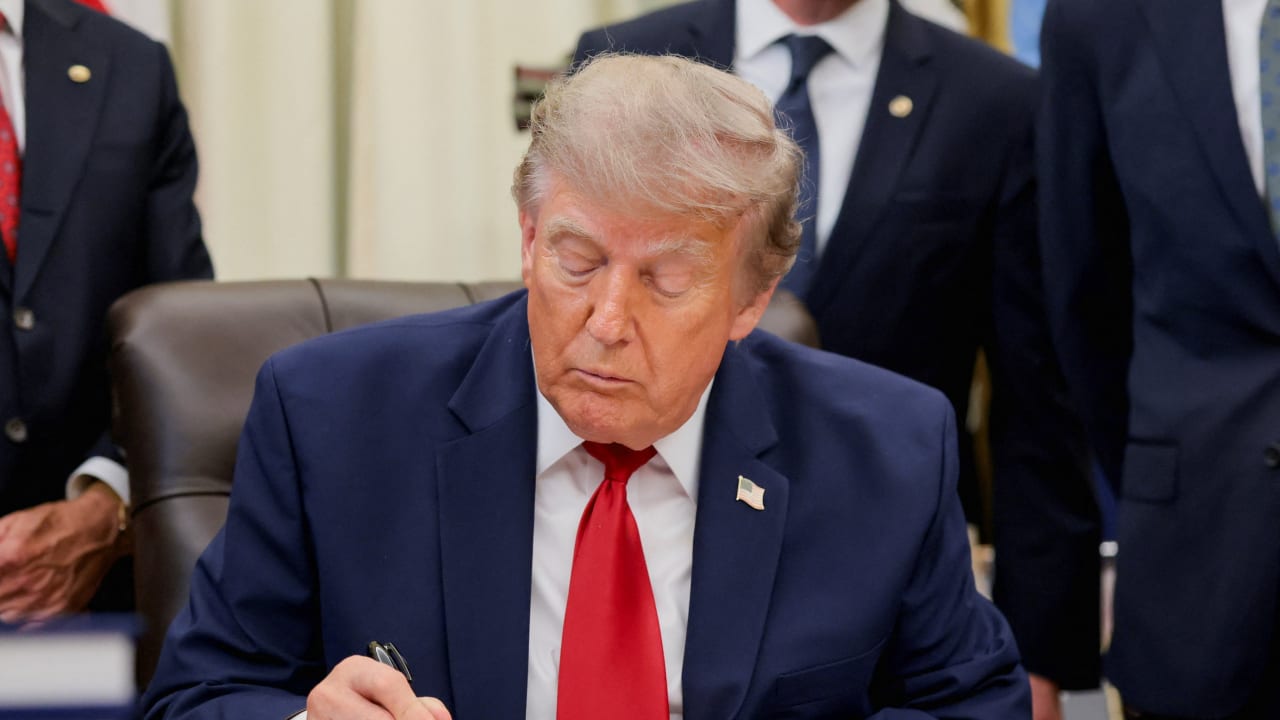
President Donald Trump has formally notified Congress that military hostilities with Iran have resumed, following renewed tensions in the Strait of Hormuz. The notification marks a significant development in U.S. policy and comes as Washington argues that Iran violated an earlier agreement intended to reduce fighting.
President Donald Trump has formally informed the United States Congress that military operations against Iran have resumed, citing recent attacks on commercial shipping in the Strait of Hormuz as the reason for renewed action.
In a letter sent to congressional leaders, President Trump said he authorized military operations to protect American citizens, safeguard national security interests, and defend international maritime commerce following what the administration describes as Iran’s breach of a previous understanding between the two countries.
According to the White House, Iran violated the memorandum of understanding by targeting commercial vessels traveling through the strategically important Strait of Hormuz, prompting the United States to resume military strikes against Iranian targets.
The administration has also announced plans to restore a naval blockade aimed at restricting Iranian shipping while maintaining that the Strait of Hormuz must remain open for international navigation.
The narrow waterway is one of the world’s most critical maritime corridors, carrying a substantial share of global energy exports. Continued instability there has raised concerns among governments and financial markets about possible disruptions to international trade and energy supplies.
President Trump’s notification to Congress also outlines the administration’s recent efforts to reduce tensions, including a temporary ceasefire and diplomatic initiatives intended to reach a broader political settlement before negotiations broke down.
The formal notification was submitted under the requirements of the War Powers Resolution, a federal law that requires the president to notify Congress after introducing U.S. armed forces into hostilities. The law also places time limits on military operations that proceed without a formal declaration of war or specific congressional authorization.
The administration maintains that the renewed military campaign falls within the president’s constitutional authority to protect national security while complying with reporting requirements established by federal law.
However, the latest action has already generated political debate in Washington.
Some lawmakers argue that any prolonged military campaign against Iran should receive explicit approval from Congress, while administration officials contend that the president possesses the authority to respond rapidly to emerging threats against American interests.
The issue has become increasingly contentious after both the House of Representatives and the Senate previously approved resolutions calling for an end to U.S. military involvement in the conflict.
President Trump criticized those measures, arguing that limiting military operations could weaken the United States’ position and encourage further aggression from Iran.
Meanwhile, diplomatic efforts to restore stability continue, with several regional governments and international organizations urging both sides to avoid further escalation and return to negotiations.
Analysts warn that continued fighting around the Strait of Hormuz could have significant consequences for global energy markets, commercial shipping, and regional security if a lasting diplomatic solution cannot be reached.
As the conflict enters a new phase, lawmakers, military leaders, and international partners will be closely monitoring developments in one of the world’s most strategically important regions.
Katy Moore, Reporting for SNEWS TV.