
Tensions in the Middle East have intensified after the United States launched a new wave of military strikes against targets in Iran, following an attack on a commercial vessel in the Strait of Hormuz. The latest exchange has raised fears that recent diplomatic efforts to ease hostilities could collapse, increasing the risk of a broader regional conflict.
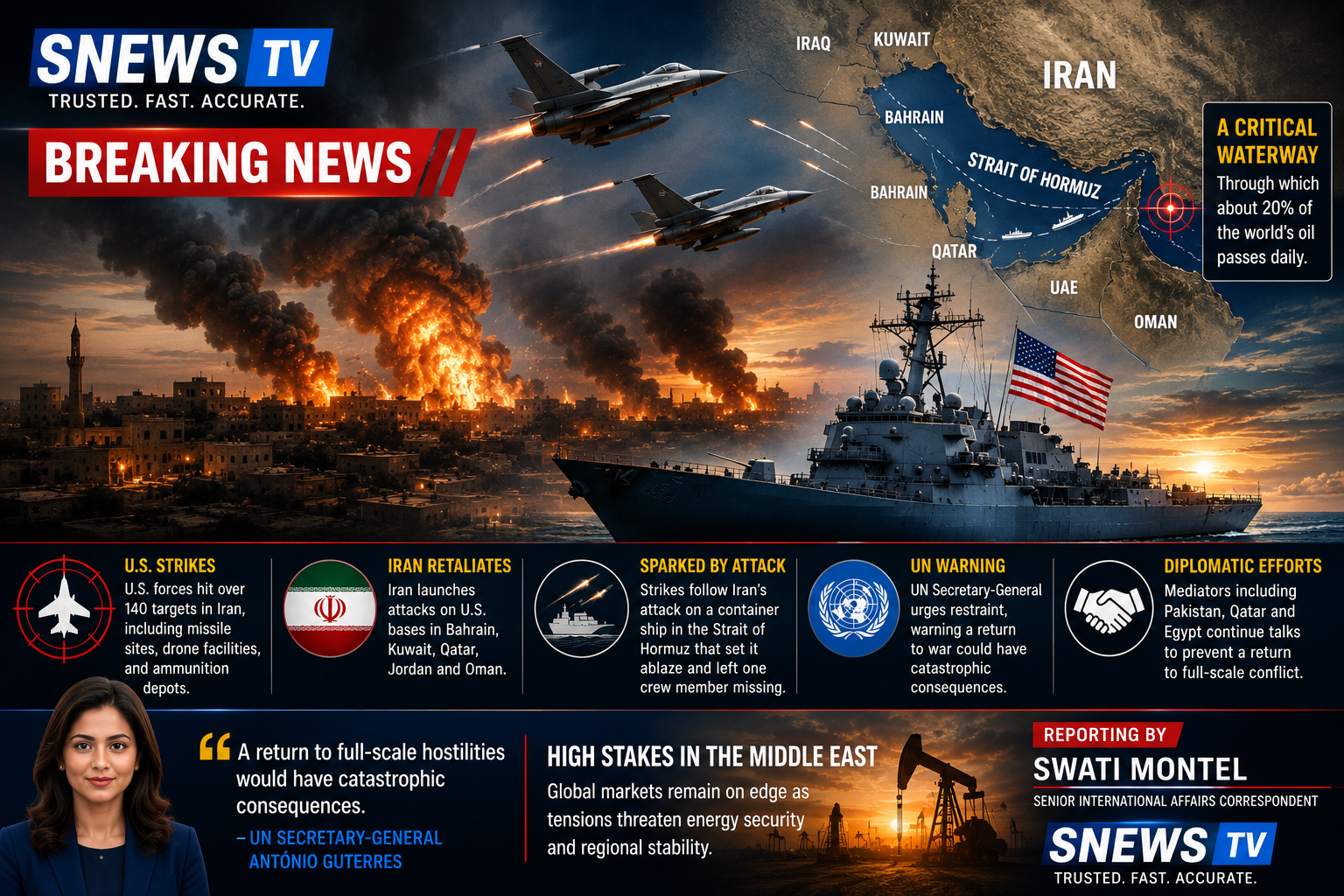
The United States carried out multiple rounds of airstrikes on Iranian targets early Monday following an attack on a container ship in the Strait of Hormuz that caught fire over the weekend and left at least one crew member missing.
According to U.S. military officials, the strikes targeted a wide range of military infrastructure, including missile launch sites, drone facilities, ammunition depots, and communications equipment. American officials described the operation as one of the largest military actions conducted during the current phase of the conflict.
President Donald Trump confirmed the strikes during a television interview, saying the United States had responded forcefully to what it considers continued threats to international shipping and regional security.
Iran responded by launching missile and drone attacks aimed at several countries across the Middle East that host American military forces. Air raid sirens were activated in Bahrain, home to the U.S. Navy’s Fifth Fleet, while authorities across the region closely monitored the evolving security situation. Officials have not yet released complete assessments of any damage or casualties resulting from the attacks.
Iranian state media reported explosions in several parts of the country following the American strikes and acknowledged casualties, although independent verification of those reports has not been possible.
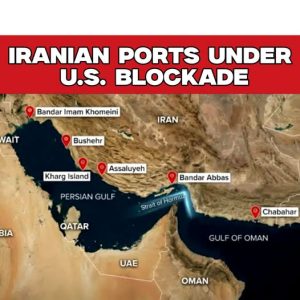
The latest escalation centers on the Strait of Hormuz, one of the world’s most strategically important maritime corridors. A significant portion of global oil and natural gas shipments passes through the narrow waterway each day, making any disruption a major concern for international energy markets and global trade.
Recent attacks on commercial vessels have increased uncertainty for international shipping companies operating in the region, despite continued efforts by coalition naval forces to secure maritime traffic.
The renewed violence comes despite an interim agreement between Washington and Tehran that was intended to reduce hostilities and create space for negotiations toward a more permanent settlement.
Diplomatic efforts led by several regional mediators remain underway, with countries including Qatar, Egypt, and Pakistan continuing discussions aimed at preventing a return to full-scale conflict.
United Nations Secretary-General António Guterres has warned that any renewed large-scale fighting could have severe humanitarian, economic, and regional consequences, urging all parties to exercise restraint and pursue dialogue.
Meanwhile, Iran has continued to insist that it has sovereign rights over the security of the Strait of Hormuz, while the United States maintains that international shipping must remain free to navigate one of the world’s busiest energy corridors.
Security analysts warn that the latest military exchanges represent one of the most serious challenges to regional stability since the current conflict began. They caution that continued attacks on military installations and commercial shipping could further disrupt global energy markets and increase the risk of a wider confrontation involving additional regional actors.
As military operations continue and diplomatic negotiations remain uncertain, governments around the world are closely monitoring developments in hopes of preventing another major escalation in the Middle East.
Swati Montel, Reporting for SNEWS TV.