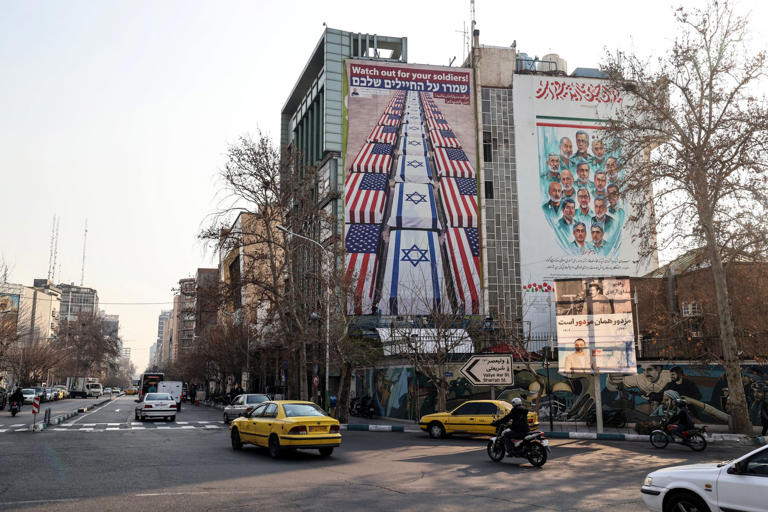
Tehran, Iran — Iran’s harsh crackdown on nationwide protests has resulted in at least 6,159 deaths, according to activists monitoring the unrest. The violence and economic turmoil have pushed the Iranian rial to a record low, plunging to 1.5 million to the US dollar, deepening the country’s crisis.
The escalating conflict coincides with the arrival of the U.S. Navy’s USS Abraham Lincoln aircraft carrier and its accompanying missile destroyers in the Middle East, signaling Washington’s readiness to respond militarily if needed. Despite this, Gulf Arab allies hosting U.S. forces have expressed reluctance to engage directly in any conflict with Iran.
In response to rising tensions, two Iranian-backed militias in the region have threatened retaliatory attacks. These developments follow recent threats from former U.S. President Donald Trump to launch military action against Tehran, citing the government’s violent repression of peaceful protesters and the potential for mass executions.
Private security analysts from Ambrey have assessed that the U.S. military is now positioned to conduct precise strikes against Iranian targets while maintaining defensive capabilities against possible Iranian reprisals. However, experts warn that punitive strikes to avenge protesters are unlikely to trigger prolonged conflict, though actions aimed at degrading Iran’s military might increase the chance of limited U.S. intervention.
The updated death toll, provided by the U.S.-based Human Rights Activists News Agency, includes over 5,800 protesters, 214 government forces, 92 children, and 49 non-protesting civilians. More than 42,200 arrests have been reported during the crackdown. The Iranian government disputes these figures, claiming a lower death toll of 3,117 and labeling many victims as “terrorists.”
The unrest erupted on December 28, sparked by the sharp decline of the Iranian rial and rapidly spread across the country. The government’s violent response has included an extensive internet blackout, restricting communications and making independent verification of casualties difficult.
At a recent United Nations Security Council meeting, Iran’s ambassador accused the U.S. of inciting violence and supporting terrorist groups without presenting concrete evidence. Meanwhile, state media attributes the protests to foreign interference as the country struggles with a faltering economy burdened by international sanctions.
The Iranian currency crisis continues to worsen, with traders in Tehran exchanging rial at unprecedented rates while many Iranians face shrinking savings and rising living costs. Subsidized currency rates have been severely restricted, and the government has offered only minimal monthly financial aid to citizens.
On the regional front, Iran’s influence through its network of allied militias — often called the “Axis of Resistance” — has been weakened after recent conflicts involving Israel and the collapse of Syrian President Bashar Assad’s regime. Yet, groups such as Yemen’s Houthis, Iraq’s Kataib Hezbollah, and Lebanon’s Hezbollah have issued warnings of potential retaliation should the U.S. or Israel launch attacks on Iran.
Hezbollah’s leader Sheikh Naim Kassem confirmed preparations for possible aggression but remained vague about specific responses, emphasizing that any actions would be determined by the unfolding conflict and strategic interests.
As Iran faces mounting internal and external pressures, the situation remains highly volatile with potential implications for regional stability and international security.
Reporting by Carl Montel.