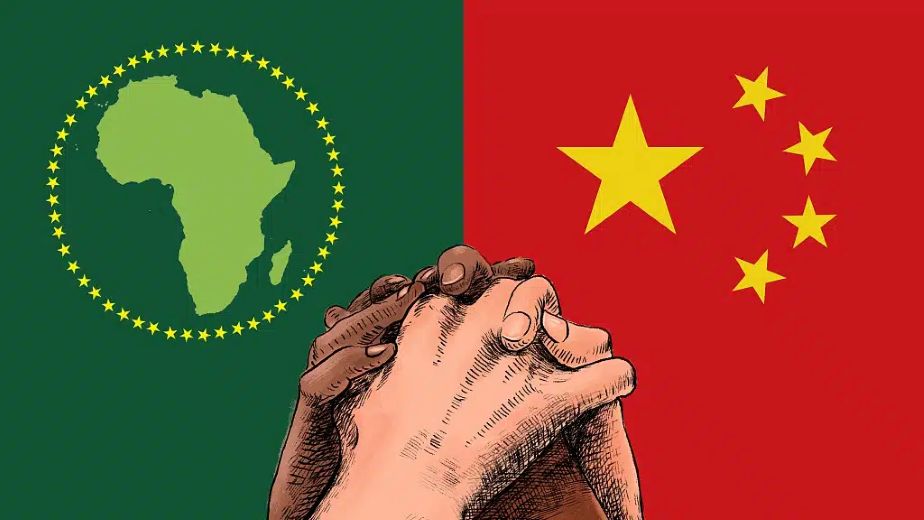
China’s lending to Africa has continued its downward trend, with loan disbursements falling to $2.1 billion in 2024, according to new data from Boston University’s Global Development Policy Center. This marks a significant contraction from a 2016 peak of $28.2 billion and a drop from the $3.9 billion rebound seen in 2023.
The decline reflects a strategic shift in Beijing’s approach. China is moving away from broad, large-scale infrastructure lending towards more selective financial engagements focused on trade, foreign direct investment, and strategic partnerships. In 2024, only six projects across Africa received Chinese loans, with Angola leading the pack by securing $1.45 billion for electricity transmission and infrastructure development.
Another notable development is China’s increased use of yuan-denominated loans instead of dollar-based financing, signaling a shift in currency strategy. The Boston University database tracks these evolving patterns in Chinese financial commitments to African governments and state enterprises.
The pool of borrowing countries has narrowed, with only Angola, Kenya, the Democratic Republic of Congo (DRC), Senegal, and Egypt receiving Chinese loans last year. These countries maintain long-standing financial ties with China despite facing elevated debt risks. The report highlights that creditors prioritize ongoing relationships and demonstrate patience with established borrowers even amid fiscal challenges.
Lending remains heavily concentrated, with Angola alone accounting for the majority of commitments. Funds there support projects such as a major transmission line in Luachimo and coastal infrastructure developments near Luanda. Kenya and the DRC followed with targeted road improvements and urban infrastructure loans, mostly yuan-denominated.
Meanwhile, financing for sectors like trade, industry, and information technology dried up in 2024, while traditional sectors like transportation, energy, water, and financial services maintained access to Chinese debt funding. This trend reflects China’s tightening focus on lower-risk sectors that remain more resilient to financing shifts.
The data also reveals China’s growing interest in strategic investments and alternative financing methods. Angola attracted $350 million in Chinese direct investments in 2025 to boost agricultural exports, while Egypt saw rising FDI in manufacturing and energy sectors.
China’s pivot to RMB loans, exemplified by deals with Kenya, offers benefits like lower interest rates and less exposure to dollar liquidity risks, though currency risks remain for borrowers without sufficient yuan reserves.
Looking ahead, experts expect China’s engagement with Africa to continue evolving toward more focused, commercially driven projects rather than large-scale development loans. The challenge remains whether this new model can sustain the historically deep economic ties between China and the continent as overall lending continues to contract.
Reporting by Noko David on the latest shifts in China-Africa financial relations.