
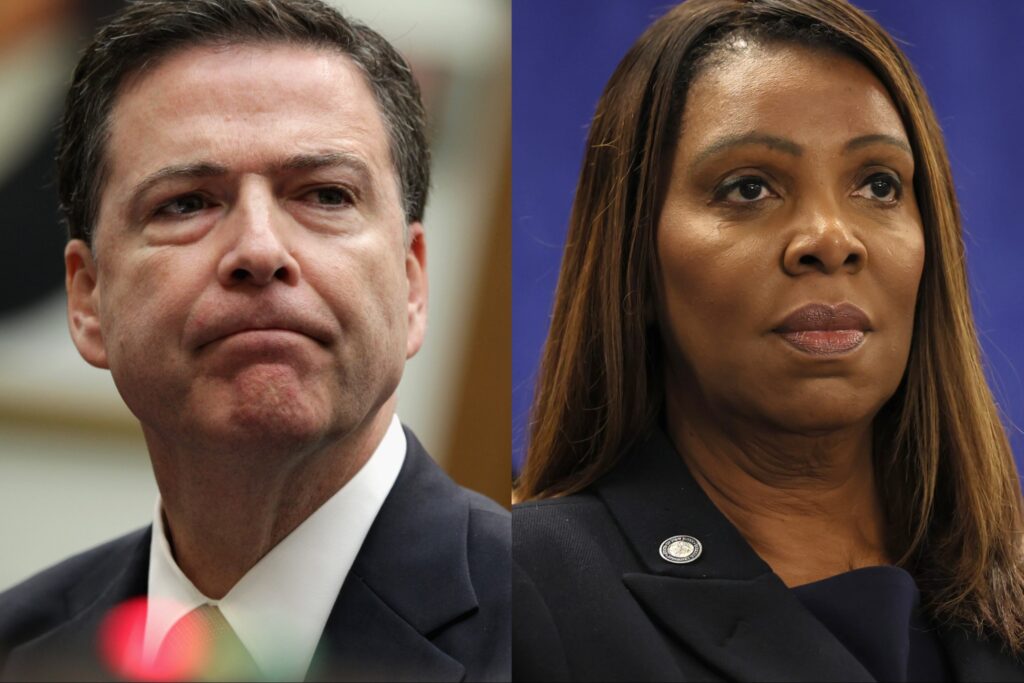
In a significant legal ruling today, a federal judge dismissed the criminal indictments against former FBI Director James Comey and New York Attorney General Letitia James. The decision came after the court found that the appointment of the U.S. attorney who brought the charges was unconstitutional.
U.S. District Judge Cameron McGowan Currie ruled Monday that Lindsey Halligan, the interim U.S. attorney responsible for the indictments, lacked lawful authority to bring the case. Judge Currie described Halligan’s appointment as “unlawful” and “ineffective,” resulting in the dismissal of the charges—though without prejudice, meaning the cases could potentially be refiled if a properly appointed U.S. attorney pursues them.
Halligan, a handpicked appointee of former President Donald Trump for the Eastern District of Virginia, initiated the indictments against Comey and James despite objections from career prosecutors. Halligan’s appointment came after Trump removed the previous interim U.S. attorney, Erik Siebert, who reportedly resisted efforts to file these cases. Notably, Halligan had no prior prosecutorial experience.
Following the ruling, White House Press Secretary Karoline Leavitt stated that the Justice Department plans to appeal the decision, emphasizing their belief that Halligan was “legally appointed” and “extremely qualified” for the role.
James Comey, indicted on charges of making false statements and obstructing a congressional proceeding related to his 2020 Senate testimony, pleaded not guilty last October. Critics have framed these prosecutions as politically motivated, part of what they describe as a campaign by former President Trump targeting his political opponents. Meanwhile, Vice President JD Vance defended the prosecutions as based on law rather than politics.
Letitia James, who last year successfully brought a civil fraud case against Trump and currently leads several lawsuits challenging his policies, also pleaded not guilty to mortgage fraud charges related to a property purchase in 2020. Prosecutors alleged she misrepresented the home’s status to secure a lower mortgage rate, claims James has denied, stating the home was purchased for her great-niece and used rent-free by family.
Following the dismissal, James expressed gratitude for the support she has received and reaffirmed her commitment to fighting the charges. Her attorney vowed to oppose any further politically motivated prosecutions.
Comey responded on social media, underscoring the case’s importance as a stand against political misuse of the Department of Justice. His attorney echoed this sentiment, praising the independent judiciary for upholding the rule of law.
Legal experts note the statute of limitations for Comey’s case may already have expired, potentially preventing refiling, while the charges against James remain timely.
The crux of the ruling focused on federal law stipulating that an interim U.S. attorney’s appointment by the attorney general lasts 120 days before appointment power shifts to federal judges in the district. After the previous interim U.S. attorney’s resignation, the judges had authorized Siebert to continue until his September resignation amid political pressure.
Within two days of Trump’s public call for prosecutions, Attorney General Pam Bondi appointed Halligan under the same 120-day statute. Judge Currie rejected the Justice Department’s attempt to retroactively validate Halligan’s appointment, warning that allowing such after-the-fact approvals would set a dangerous precedent.
The judge clarified that the authority to appoint the interim U.S. attorney for Eastern Virginia now lies with the federal judges until a permanent nominee is confirmed by the Senate.
This ruling underscores ongoing tensions over the politicization of the Justice Department and raises questions about the future of these high-profile prosecutions.
We will continue to monitor developments, including any appeal filings from the Justice Department.
Reporting by Katy Moore.