Tensions are rising in the Caribbean tonight as Venezuelans opposed to President Nicolás Maduro call on U.S. President Donald Trump to intervene militarily and remove the Left-wing leader from power.
The deployment of U.S. warships to the region—the largest naval presence in the Caribbean since 1989—has fueled speculation of a potential military operation. Washington says the deployment targets drug trafficking, pointing specifically to the Cartel of the Suns, a group it claims is composed of high-ranking Venezuelan officials and recently designated as a terrorist organization.
The Trump administration has also doubled its reward for information leading to Maduro’s arrest to $50 million—twice the bounty once offered for Osama bin Laden. U.S. Attorney General Pam Bondi called Maduro “one of the largest drug traffickers in the world and a threat to our national security.”
The U.S. deployment includes 2,200 Marines trained for beach invasions, along with additional personnel and a nuclear-powered fast attack submarine. Officials have suggested this could mirror past operations, including the 1989 Panama invasion and the 2003 toppling of Saddam Hussein.
For many Venezuelans, the presence of U.S. forces has sparked hope. Orlando-based journalist Melanio Escobar said, “I will support anything that will free my country from the narco-dictatorship that constantly violates human rights.” Former opposition candidate Edmundo González suggested the buildup could fracture Maduro’s support, adding, “Soldiers are loyal until they’re not.”
Yet, not all are confident that U.S. intervention will come. Jackson Fernandez, a Venezuelan living in Colombia, told The Telegraph, “I know the United States could do it if they wanted to, but I’m worried it’s something else they’re looking for other than regime change.”
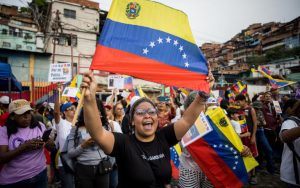
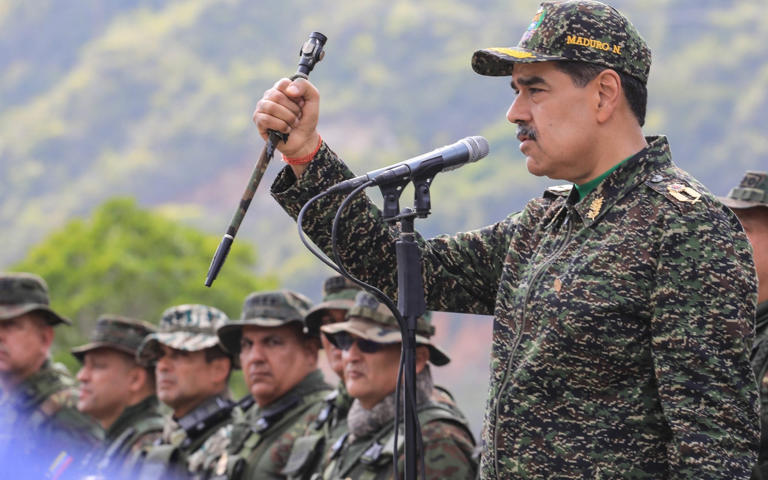
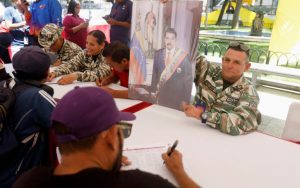
Meanwhile, Maduro has mobilized 15,000 troops to the Colombian border and called on the civilian militia nationwide, warning citizens that any U.S. action would be “immoral, criminal and illegal.” Some supporters have responded to his call, while others have protested against Washington’s presence.
As the standoff escalates, regional nations including Argentina, Ecuador, Paraguay, and Trinidad and Tobago have taken positions—some labeling the Cartel of the Suns a terrorist organization, others voicing support for U.S. operations.
With oil resources and regional security also at play, the situation remains tense—and Venezuelans continue to watch closely, hoping for change yet wary of the consequences.
Reporting by Katy Moore.