
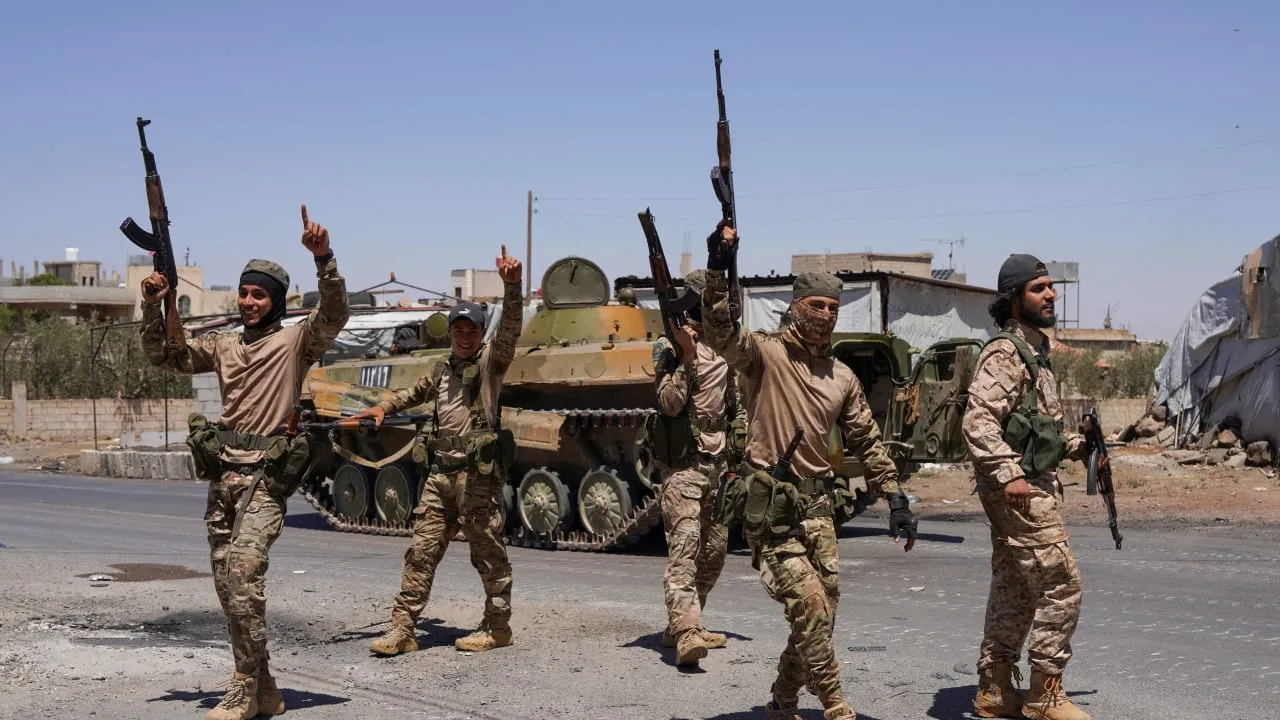
We focus on rising violence in Syria’s Druze city of Sweida a conflict that’s putting Israel under increasing pressure to make difficult decisions along its southern border.
After four days of intense clashes between Druze militias and Syrian government forces, efforts to establish a ceasefire have so far failed. Graphic images of violence and casualties among the Druze community are fueling fears of a dangerous spillover that could destabilize the entire region.
Israel has pledged support to the Druze population but is facing complex challenges on the ground. Israeli Defense Forces have reinforced their border units amid reports of Druze men crossing into Syria from Israeli territory, raising the stakes for further escalation.
The roots of the conflict in Sweida are deep and multifaceted. This marks at least the third major confrontation since the Assad regime’s fall. Local tensions often begin with clashes between armed Druze groups and other factions, including Sunni Bedouin tribes. The Syrian government resists any autonomous armed Druze presence, viewing it as a threat to regional stability, a view shared by many Sunni Arabs and exploited by extremist elements.
While Israel’s Druze citizens strongly support their brethren across the border, the situation on the ground is complex. Israeli forces have maintained a presence in southern Syria, especially near Mount Hermon and the buffer zones, occasionally conducting raids against Iranian-backed militias operating close to the border.
This has historically kept the conflict in check, but recent developments suggest a potential spillover. Past incidents, like the 2015 lynching of two Syrians by Druze men on the Israeli side, demonstrate the volatility of the border area.
Israeli Druze communities in the Golan Heights watch the situation closely. Villages such as Majdal Shams overlook Syrian Druze areas like Khader which was threatened during earlier rebel advances in 2014-2015, sparking alarm among Golan Druze.
While the Druze in Syria largely supported Assad during the war, they have increasingly sought greater autonomy since his regime weakened. Israel has cautiously backed this, but now faces a delicate balancing act.
Adding to the tension, Israeli military leaders have publicly threatened to target Syrian President Ahmed al-Sharaa. The United States is working behind the scenes to prevent any escalation, with Special Envoy Tom Barrack urging calm and dialogue. However, the presence of Druze crossing the border into Syria complicates the situation further.
The Israeli Defense Forces recently reported thwarting dozens of suspected infiltrators near Hader in the Quneitra Governorate and safely returning civilians who crossed into Syria near Majdal Shams. The IDF has labeled these incidents as serious offenses, endangering both civilians and soldiers.
Israel faces a hard choice: either risk deeper escalation in southern Syria, or seek ways to de-escalate the mounting tensions. So far, Israel’s leadership has leaned toward stronger military responses, including airstrikes — but whether this approach will stabilize Sweida remains doubtful.
The ongoing violence reflects a broader power vacuum in southern Syria. Israel’s push to demilitarize the area has left armed groups like the Druze militias wielding significant influence. Meanwhile, the Syrian government struggles with a weakened army largely reliant on irregular militias, leading to cycles of conflict and instability.
Druze communities fear extremist attacks, prompting armed resistance against government forces. This sparks Israeli military intervention, continuing the destructive cycle.
As fighting in Sweida enters its fifth day, the situation is at a critical juncture. Syria must find a path to contain the violence and seek a political resolution — failure to do so risks spiraling the conflict further, with potentially grave consequences for the region.
We will continue to monitor this evolving crisis closely.
Reporting by Katy Moore.