
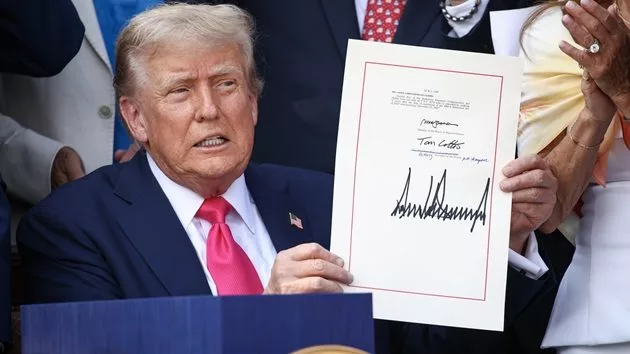
Major developments out of Washington as President Donald Trump’s newly signed tax and spending megabill is poised to shake up America’s education landscape—from student loan reforms to expanded school choice.
After a heated month of legislative battles, the bill—hailed by conservatives and heavily criticized by progressives—marks one of the most sweeping changes to the U.S. education system in decades.
Let’s take a closer look.
Under the new law, the student loan system will be dramatically restructured. Starting July 2026, all existing repayment plans for newly issued federal student loans will be eliminated. In their place: a simplified two-option system—either a standard repayment plan or a new income-based option called the Repayment Assistance Plan.
The Department of Education has urged borrowers to review their options, particularly those enrolled in Biden-era programs now facing legal challenges. Supporters, like Education and Workforce Committee Chairman Tim Walberg, argue the new system protects taxpayers while still helping struggling borrowers.
However, critics like Aissa Canchola Bañez, policy director at the Student Borrower Protection Center, say the changes are devastating. She warns that eliminating key loan protections could force families into more expensive private lending markets, calling the legislation a “dangerous attack” on working Americans.
The bill also imposes borrowing caps for parents and abolishes graduate PLUS loans, drawing concern from education advocates who say it limits upward mobility.
Keri Rodrigues, head of the National Parents Union, fears the new restrictions could cut off college access for thousands of low-income families.
Meanwhile, the bill delivers on another Trump-era promise: expanding school choice. The Educational Choice for Children Act, part of the broader megabill, introduces a tax credit incentive for individuals and businesses that fund K-12 education scholarships.
Set to begin in 2027, this provision could unlock funding for students in both public and private schools.
Supporters like Rep. Adrian Smith and Tommy Schultz of the American Federation for Children say the law puts power back in the hands of families. Schultz called it a “monumental step” toward universal educational freedom.
But not everyone is applauding.
Democratic Senator Mazie Hirono slammed the program as a tax giveaway to the wealthy, claiming it drains public school resources. And Randi Weingarten, president of the American Federation of Teachers, accused the law of enshrining a “voucher system” that undermines the public school system serving 90% of U.S. students.
Still, charter school advocates like Dr. Eva Moskowitz of Success Academy insist it’s time to break away from what she calls the “public school monopoly.” She says the bill offers a “concrete solution” by investing in proven, high-performing educational alternatives.
As the education overhaul rolls out, legal challenges are expected—and so is debate. But one thing is clear: this new law could redefine what schooling and student support look like in the years ahead.
Stay with SNEWS TV as we continue to follow this landmark legislation and its impact on students, families, and educators across the country.
Reporting by Katy Moore.